

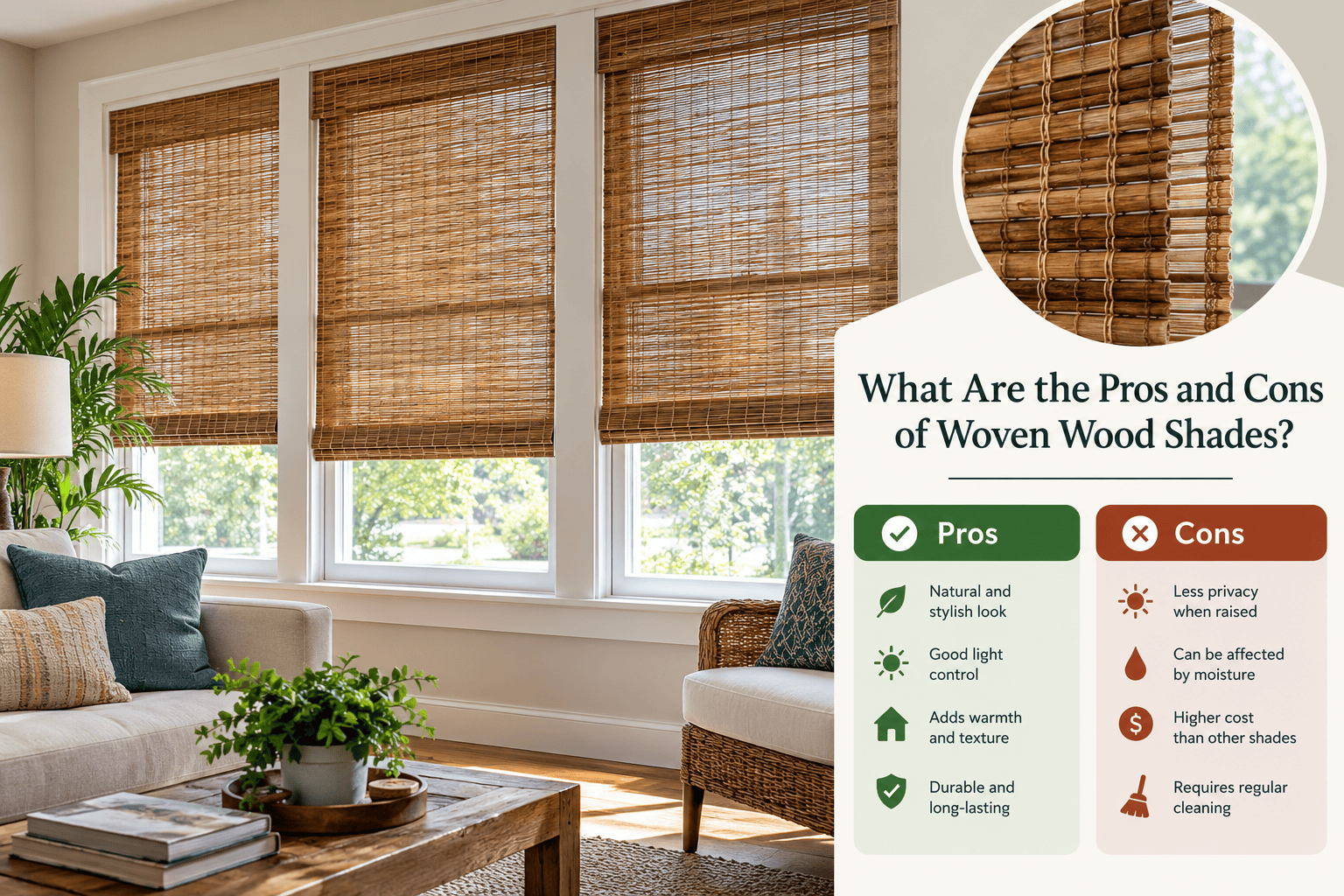
The main pros and cons of woven wood shades are easy to sum up. They look warm and natural, filter light softly, and fit many decor styles. But they can fade in strong sun, may warp in damp rooms, and need careful cleaning. They suit living rooms, bedrooms, and dining rooms best.
In this guide, you will learn the key benefits and drawbacks of woven wood shades so you can decide with ease. We also include tips on choosing and caring for your shades. BDIY Blinds wrote this guide to help you pick window coverings with confidence.
What Are Woven Wood Shades?
Woven wood shades are window shades crafted from plant-based fibers. These include bamboo, reeds, grasses, and jute. Makers weave the fibers into a flat panel. The panel then lifts as a roller or folds up like a Roman shade.
Some people call them bamboo shades. The names are often used for the same style.
Each shade looks a little different. Natural fibers vary in color and texture. That is part of their charm.
Benefits of Woven Wood Shades
Here are the main reasons homeowners choose them.
1. Natural and Warm Look
The texture adds depth to a room. Woven wood shades work in modern, rustic, coastal, and traditional homes.
2. Soft Light Filtering
The weave lets in gentle, filtered light. The room feels bright but not harsh. A heavier weave blocks more light.
3. Many Privacy Options
You can add a liner to boost privacy. A blackout liner helps in bedrooms and media rooms.
4. Eco-Friendly Materials
Many are made from fast-growing, renewable plants. This appeals to buyers who want greener choices.
5. Easy Operation
You can pick cordless lifts or motorized controls. Cordless styles are safer for homes with kids and pets.
6. Wide Range of Styles
You can choose roller or Roman-style folds. Colors range from light sand to deep espresso.
7. Some UV Protection
They help block part of the sun’s glare. This can protect floors and furniture from harsh light.
Disadvantages of Woven Wood Shades
No window treatment is perfect. Know these downsides before you buy.
1. Sun and Moisture Can Cause Damage
Natural fibers react to light and humidity. Over time, they may fade, warp, or change shape.
2. Not Ideal for Humid Rooms
Bathrooms and steamy kitchens are poor fits. Moisture can harm the material.
3. Harder to Clean
You cannot wipe them like faux wood blinds. Regular dusting or light vacuuming is the safest method.
4. Light May Leak Through
The weave has small gaps. Without a liner, you may see light or shapes through the shade at night.
5. Natural Variation
Color and texture can differ from the sample. This is normal, but it can surprise some buyers.
6. They May Stretch Slightly
Heavy natural fibers can stretch a little after install. This shows most on tall or inside-mount shades.
7. Cost
Custom woven shades often cost more than basic vinyl or faux wood blinds. Price depends on size, material, liner, and lift type.
Woven Wood Shades Pros and Cons at a Glance
| Pros | Cons |
| Warm, natural look | Can fade in strong sun |
| Soft, filtered light | May warp in humid rooms |
| Liner options for privacy | Harder to clean |
| Renewable materials | Light can show through without a liner |
| Cordless and motorized choices | Natural color variation |
| Many styles and colors | Often costs more than basic blinds |
Woven Wood Shades vs Other Window Treatments
This table compares common options.
| Feature | Woven Wood Shades | Roller Shades | Faux Wood Blinds | Roman Fabric Shades |
| Look | Natural, textured | Clean, simple | Classic slats | Soft, tailored |
| Light control | Filtering, better with liner | Good to blackout | Adjustable slats | Good with liner |
| Moisture resistance | Low | Medium | High | Low to medium |
| Cleaning | Dust only | Easy | Easy | Spot clean |
| Cost level | Medium to high | Low to medium | Low to medium | Medium to high |
| Best rooms | Living, dining, bedroom | Most rooms | Kitchen, bath | Living, bedroom |
Do Woven Wood Shades for Windows Suit Your Home?
Not every room is a good match for natural fibers. This quick guide shows where they fit best and where they do not.
Good choices:
- Living rooms
- Dining rooms
- Bedrooms (with a liner)
- Home offices
- Sunrooms with some shade
Poor choices:
- Bathrooms
- Laundry rooms
- Steamy kitchens
- Windows with constant direct sun
If you live in a hot, sunny area like the Las Vegas Valley, ask about liners. A good liner can help shield the fibers from strong light.
Tips for Choosing and Caring for Woven Wood Shades
How to Choose
- Order samples. Check the color and weave in your own light.
- Pick a liner. Choose privacy or blackout based on the room.
- Choose cordless. It is safer and looks cleaner.
- Measure with care. Check every window size on its own, as windows that look alike can differ by a fraction of an inch.
- Compare mounts. Outside mounts can hide gaps and reduce light leaks.
How to Care for Them
- Dust often with a soft brush or duster.
- Use a vacuum with a soft brush attachment.
- Avoid water and harsh cleaners.
- Keep them away from steam.
- Raise them fully when you clean around them.
Conclusion
The pros and cons of woven wood shades come down to style versus care. You get a warm, natural look, soft light, and many custom options. In return, you must protect them from moisture, strong sun, and rough cleaning.
If you want help choosing the right style, liner, and lift system, talk with a local window treatment expert. BDIY Blinds suggests ordering samples and measuring carefully before you buy. A little planning will help your new shades look great for years.
FAQs
Are woven wood shades a good idea?
Yes, for the right rooms. They add warmth and soft light. They work best away from moisture and harsh, constant sun.
What are the disadvantages of woven wood shades?
They can fade or warp over time. They are harder to clean. Without a liner, light can pass through the weave.
Do woven wood shades provide privacy?
Yes, mostly. Add a liner for better privacy, especially at night.
Are woven wood shades hard to clean?
They need gentle care. Dust them or vacuum with a soft brush. Do not use water or strong cleaners.
Can woven wood shades be used in bathrooms?
It is best to avoid them. Humidity can damage natural fibers. Faux wood blinds or moisture-safe shades are a better fit.
